Why your SSSP is failing on site before work begins
A site-specific safety plan that lives in a folder is not a safety plan. We look at why documentation and practice diverge so consistently, and what to do about it.
Construction

Practical Safety. Real Controls. Better Work.
Every safe site begins long before the crane arrives. We work alongside your team in pre-construction to identify critical risks, sequence the work, and design controls into the plan from day one.
Systems are only as good as the moment they are tested. We work with engineers to implement practical controls, train the people who rely on them, and verify relentlessly so that safety performs when the work gets hard.
A culture of safety is not delivered, it is grown. We partner for the long term, coaching supervisors, reviewing incidents, and refining your systems until doing it properly becomes simply how your people work.
About ProperSafe
ProperSafe is a New Zealand health and safety consultancy. We work with contractors, project owners, and operations teams who are tired of compliance theatre and want systems that genuinely protect people and performance.
We are not a paperwork business. We are a thinking business. Our work starts with understanding how work actually happens, not how procedures say it should, then we build controls that fit.
ProperSafe is led by Tom Jones, a seasoned health and safety advisor with over 20 years of field experience across New Zealand. Not just from a safety point of view, either. Tom has worked on the tools in the jobs ProperSafe advises on: on the lines, in the fields and on the sites. Tom is a member of the New Zealand Institute of Safety Management (NZISM).
Most safety programmes ask people to do something extra. Another form, another control, another sign-off. ProperSafe works the other way round.
On a construction job, everyone affects the programme, the quality and the safety of the work. The client, the business owner, the designer, the estimator, the project manager, every trade, the suppliers and the labourers. Nothing is siloed. So we don’t treat safety as a separate thing. We help people get better at their actual job.
Good safety is good project management. Safety is a by-product of doing the work properly.
Better professionals are easier to work with. Everything is sorted before they arrive. They price right, so they aren’t cutting corners halfway through to save money. Their work is higher quality, they get more done, and they are the safest people on site.
That is why they get the next job. Not because quality said so. Not because safety told them to control something. Because they are professionals.
I know about five people in every trade that I’d recommend to anyone. I recommend them because they are the most professional at what they do. They price in their controls. They come equipped. They pick the right tool, the right attachment and the right setup for the job. They know how their work will affect the trades around them, and the quality, productivity and safety of the whole job.
They are easy to work with and they are never on anyone’s radar. Project managers love them. Quality loves them. Safety loves them.
ProperSafe works with clients, businesses and trades to build this into how the work is actually done. One plan that people use, not seven that sit in a folder. Pricing, programming, setup and paperwork that line up with the real job. People who know their role and how it connects to everyone else’s.
Be a better professional, and safety, quality and productivity follow.
Talk to us about your project →What We Do
You might call us about an audit, a risk assessment or a form that needs updating. We will do that. Then we will look at why the problem exists, and whether it can be designed out so it costs less, runs better and stops coming back.
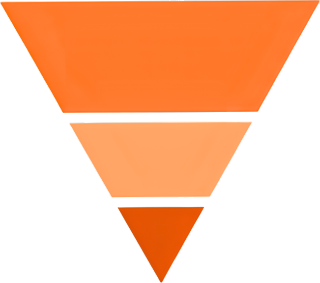
01 · Start here
Before we fix the problem you called about, we look at how safety is seen across your business. Does everyone know their role and the impact they have on safety, from the leadership team to the newest starter? Most recurring problems start here.
02 · Eliminate
The first question is whether the task needs doing at all, or doing this way. Removing the hazard is the only control that gives you certainty, and it often takes cost, time and hassle out with it.
03 · Substitute
Is there a safer alternative that is also faster, delivers better quality and makes you more money? Safety and productivity are not a trade-off. The best substitutions win on every count.
04 · Engineer
Why reinvent the wheel when you can choose the best one out there? We look for the Formula One wheel: proven engineering solutions that are quicker, more productive, better quality and safer than what you run now.
05 · Admin
Is this form necessary? Does this procedure support a control that actually manages risk, or is it clutter? Admin controls can matter. First we find out which ones do, make those work, and get rid of the rest. We have taken teams from seven plans down to the one they actually use.
06 · PPE
Are you reaching for PPE first? Is it a uniform or a risk control? We check your people know why they wear it, that it suits the task and works, and whether the risk can be designed out so they don’t need it.
Our Approach
Too many safety programmes default to the bottom of the hierarchy. PPE gets issued, a form gets signed, and the hazard stays exactly where it was. This is not safety. It is the appearance of safety.
Every engagement starts with an honest look at where your current controls sit. Then we work upward, eliminating, substituting and engineering the risk out wherever the work allows.
Where admin controls are the right answer, they still have to work. That’s where NeuroSafe and our Safety Tech & AI practice come in: documents people actually read, and systems that keep a control alive instead of leaving it in a folder. See Safety Tech & AI →
The result is a site where workers are protected by design, not by vigilance every minute of the day. That is what practical safety looks like.
Insights
A site-specific safety plan that lives in a folder is not a safety plan. We look at why documentation and practice diverge so consistently, and what to do about it.
Policies are written at desks. Safety is built by frontline supervisors. Investing in this layer of the business produces more durable results than any management system alone.
The Health and Safety at Work Act is widely cited and frequently misunderstood. A plain-language breakdown of PCBU duties and what "reasonably practicable" really means.
Contact
Whether you need a full safety system build, a one-off audit, or just a second opinion on a risk, we are easy to reach and quick to respond.